Sunday, July 18, 2010

Four years in London

Four years of eating, traveling, of being a slow eater. So looking back, here are some of my favourite moments, in no particular order:

  • Discovering the joys of open-air dining in the Gaudi Park in Barcelona with Luke. First stop, the market; second stop, art. Classical guitar could be heard in the distance as we sat enraptured and amazed that we had fallen in love. Perfect.

  • My three-hour lunch with Angelo, the mysterious Italian, at the Slow Food Osteria Da Mario near the central market in Florence.

  • On the Isle of Skye, driving with my parents down sheep tracks to find one of the world's most remote restaurants. What followed at the Three Chimneys, the food, atmosphere and location, is one of my most memorable three-hour lunches.

  • Cooking English sausages from Parson's Nose, my then local butcher, for three starved Aussies - Warren, Eli and Jamie.

  • Misbehaving and badly with my friend of a lifetime, Warren, at the Loos Bar in Vienna.

  • Going native at a local Parisian market with Al and Luke and cooking a wonderful dinner of heritage carrots, caramelised endive and what has since been dubbed, the yellow chicken- stuffed with fresh herbs and day old croissant.

  • Celebrating something - I can't remember what, at the Ritz with Luke and drinking Ritz 100s, watching as the gold leaf floated to the top of the glass as it dissolved in the champagne.

  • Being introduced to Bob Bob, that's Bob Bob Ricard, by our friend Alana and sampling some of the best kedgeree, I have ever tasted. All on an ordinary London Saturday.

  • Eating oysters with HJ and Luke in NoHo, San Francisco. We'll have another dozen please!
To celebrate four years , I purchased this at auction at one of my favourite places in London- Criterion auction house. There's no signature and no date, so I can only guess when it was painted. In all likelihood, it could be the Queen's coronation. The auction house told me that the painting is circa 1950s.

Here's a close up - it's London in summer. Just like today. (if you click on the picture you can see the detail.)


A man of the sea

Château Richeux is home to Le Coquillage, one of several restaurants run by local Breton and celebrity chef, Oliver Roellinger.

Most famous for the now closed La Maison du Bricourt, for which he won and then returned not one, not two but three Michelin stars expressing his need to have a simpler life.

Roellinger has a formidable reputation. There are very few chefs who have made the front pages of Le Figaro for handing back the coveted Michelin. (Le Coquillage has just been awarded its first star this year.)

So it was with great expectation and excitement that we arrived at Le Coquillage. With views across to Mont St-Michel, this is a restaurant that plays to its reputation.

The drive offers sweeping views of the sea, which on this Saturday evening at the start of summer is hauntingly barren at low tide. The cypress trees bend and stretch in the wind. There is no hint of summer, only the movements of the seasons across sea and land.


This is a fitting picture for a man who says that “the sea has given me everything” from the earliest of his childhood memories in Sant-Malo to the desire to travel. His blends of spices for which he is famous are inspired by his journeys to Madagascar, Vietnam, and the West Indies.

But tonight is about Brittany and a menu dedicated to the sea.

First to the table is bread: the quotidian of life. Served with spiced butter of cayenne pepper, the bread is favoured with seaweed. The taste of the bitter sourdough with what could only be described as the tartness of the seaweed is both distinctive and delicious. Made on onsite and available for purchase, the bread is cooked in an oven designed by the famous Lionel Poilâne.

If our bread introduces a note of the sea, our appetizer offers its riches with smoked mackerel accompanied by crisp breads served with a smoked salmon mousse and transparent radish wafers. Poetically represented on slate and washed rocks, each mouthful is delicate, of outstanding quality, exquisite in favouring.

Our appetites now whetted, our selection begins with a dish of tomatoes, artichokes and marjoram with grilled sardine. Clams cooked with garlic and parsley bretonne method is also ordered.

The tomatoes are of a sunny disposition – saturated, intense in their heritage colours of blush pink, golden yellow and field green. The plate decorated with flowers of marjoram is the perfect homage to the garden from which these fruits came.

The clams are fresh and succulent, remarkably distinct in their favour despite the rich intensity of the garlic and parsley. The only note of disappointment is the squid fritters with fleur de sel and tomato chutneys that was also ordered. Whilst perfectly cooked, this almost conventional dish fails to compare to others.

From a menu of pigeon cooked on wood fire with buckwheat and one of the unique spice mixture of Epices-roellinger (wind power) and lobster grilled cancale-style, it is the sole that wins out.

Four orders are placed and it is clear from the first mouthful that we have been rewarded in our unanimous choice. The delicate sole separates easily from bone, its fine fillets, so perfectly cooked. The butter is delicately favoured – nutty with the zest of lemon. The mash is presented as a trio - classic, then favoured with seaweed and finally with candied lemon. Each one compliments the next. Perfect flavoured - surprising and unexpected.

The cheese cart we leave to others but watch with interest the use of oils and spices to compliment the local Brittany and Normandy cheeses. Instead we select from the dessert cart – the memory of which demands a second pause of appreciation.

Imagine delicate meringues, fresh nougat studded with almonds, a raspberry sorbet. A flirtatious mille fleur and a densely rich and very inviting chocolate tart.

Where to begin? With chocolate mousse tart, a broche style pastry filled with pistachio mousse and the nougat.

It is easy to understand why Parisians drive the distances to come to Le Coquillage to eat from this table of this man of the sea.

At each course, you taste the freshness of each season with local ingredients. Oliver Roellinger’s note that his menu is dedicated to the local suppliers and producers is an appropriate one, for the experience of this bistro is one that celebrates Brittany. I for one cannot wait to go back.

Things to do in Brittany
Mont Saint-Michel: This rocky islet is home to the famous abbey that sits on the border between Normandy and Brittany. According to Catholic lore, the Archangel Saint Michael instructed the bishop of Avranches, Saint Aubert, to build a monastery. From the year 1000 on, and for six centuries thereafter, the Dukes of Normandy and pilgrims have financed the construction of additional structures. It was designated a UNESCO World Heritage Site in 1979.
.
Thalassotherapy: Famous for its sea water therapies, Brittany offers the perfect retreat and therapy for rheumatism, arthritis, stress, weight loss, physical therapy. This is an opportunity to book a day spa, get covered in mud and sea algae, and recharge.

Saint-Malo: Take the boat from the medieval town of Dinan to Saint-Malo. Walk along the fortress and out to the sea pool and harbour. Sample the local moules et frittes – the muscles are much smaller than those found in the Pacific and are delicious.


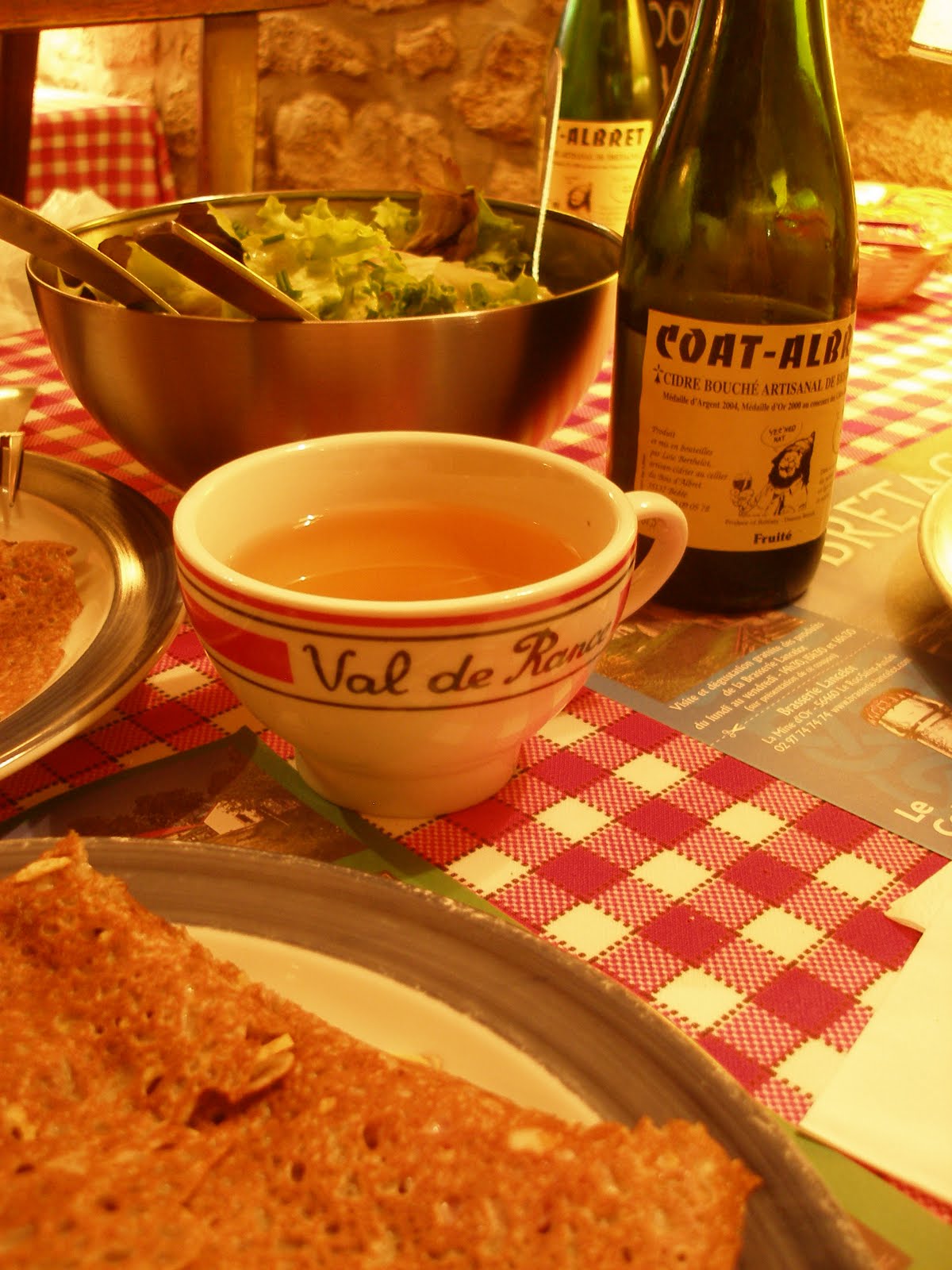
Dinan: This is the town where I tasted my first true Breton buckwheat galettes: ham, cheese and caramelised onion served with a local cider. Always look out for the label crêperies gourmandes. Standards are strictly monitored by the Crêperie Gourmande committee.
A quaint medieval town with lots of winding streets and boutiques, some touristy, others not. Indulge in some additional striped behaviour with a pullover from St James.

Market: At the local market of Dinard, you’ll find the perfect baguette, slice of Brittany butter, striped shirt and shopping basket. Select from the best in season – from summer strawberries and white asparagus through to heritage tomatoes. Open Tuesday, Thursday and Saturday.

Special thanks to my friend Maya for inviting me to her family home in St Briac. One of the most beautiful places I have ever been in the world.

Dedicated to Gerard McLennan, another man who loved the sea.

Sunday, January 10, 2010

I want to live in a kitchen

Well actually, I want to live in the kitchen at Leila’s café in Shoreditch near Columbia Road market.

With its open workspace, industrial cabinetry and perfect Melbourne-style coffee, it would be my ideal place to cook and eat, entertain and live.

The kitchen would house every kitchen appliance, gadget and importantly magazine and cookbook, I own and desire to own. The wooden ranks would hold plates old and new, glassware, platters and bowls.

The benches would be my library and display area from a book of M.K.Fisher’s letters to framed menus that I have collected (or should I say liberated) from restaurants and cafes where I have eaten. Overhead would be the crowning glory of pots and pans, large cooking instruments.

From the kitchen and simply divided by a wooden bar, I could look upon the living area with a large table for entertaining.

A perfect world.

Friday, December 25, 2009

Traditions old and new - Christmas day

What is it about Christmas?

On Christmas morning, I still feel the same anticipation that I felt as a child. I wake up. Always early - eager and excited. It’s the promise of presents, calls from overseas, and of course, lunch. But it's also much more.

Every year, we bake, we sample, we oohh and ahhh at the same moments – the lighting of the pud, the presentation of the Christmas bird with all its trimmings, the mince pies, and then the post-lunch snooze. Scattered bodies asleep. My father washing dishes and my mother, sitting and chatting.

When asked by English friends, what we have for Christmas dinner in Australia, I’m always taken aback. I find the question surprising. Many expect me to describe the Paul Hogan equivalent of prawns on a Barbie. I've never had a prawn on the barbie. Morton Bay Bugs, yes, but never at Christmas. Prawns, no, under any circumstances. With an English father, Christmas dinner was a traditional one, regardless of the weather.

With the air conditioner roaring to the point of exhaustion, Christmas dinner was and will forever be roast turkey, vegetables and all the trimmings. There has been the occasional variation. I think a goose made it to the table once (and was never sighted again), and my grandmother’s pudding has now been replaced by a store brought one, but tradition remains firmly tradition.

Living in a new country, you enthusiastically embrace the old but also look to adopt the new. This year saw me traipsing through the snow covered fields of Hampstead Heath to the local farmers market to retrieve a duck! A 2.4 kg free range duck to be exact.

It was the star of the show last year and a repeat encore had been decided. It’s tradition was the affirmative from Luke, that and the yule log, his Dutch-heritage inspired Christmas dessert.

Like many traditions in the making, ours has been a little trial and error.

Inspired by our recent trip to Germany, I decided that I would use preserved blueberries rather than fresh ones for our breakfast of blue berry pancakes with maple syrup. Don’t ask me the lineage of this tradition – we just like them (and this is surely the basis of most traditions). The result as posted was less than satisfactory. Luke said they looked like ham steaks. I think the fault resided more with the change in recipe. You see that's the thing. Find a good recipe and stick with it. Deviation, innovation whilst tempting only leads to disaster on Christmas Day.

So this is why, I returned to last year’s recipe for duck. When the ohhs and ahhs last longer than Christmas Day, then you know the recipe must be good. So after a quick and rather panicked search for the recipe online (internet recipes always seems to disappear), the vital ingredients were discovered for the rub:

1 tsp ground coriander
1 tsp ground ginger
pinch ground allspice
6 or so thyme sprigs, left whole
zest 2 clementines (or as we say in Australia, mandarins), juice of 4

Twenty minutes on a high heat (220) following by 180 for as long as it takes to cook the duck. (I should add here that said recipe is for duck breast, whereas I have duck, so I doubled all ingredients).


When it comes to Christmas dinner, timing is everything, like most things in life.

From experience, I can say that my timing is not always that good. The duck was (or should I say is) cooking now and it's a little larger than expected. Perfect for six but enornomous for two. Creative reworkings of duck with no doubt dominate Boxing Day. My concerns at present reside with whether the duck is sufficiently cooked - at present, it is on top of the stove covered in foil.

All of that said the smell is fabulous and the vegetables are off the boil and now in the oven. As I said before, timing is everything. But all accounts, that is by Jamie, I should have put the vegetables in the oven 40 minutes ago.

It is clearly tradition that helps all and sundry, navigate the trials and tribulations of producing the perfect Christmas lunch.

My mother has for many years fantastised about her great escape. She secretly longs to go out for Christmas lunch but she has never done so. For while the thought of being served rather than doing the serving is attractive - for her, Christmas wouldn't be same and that's what we all want is sameness.

So as our dinner approaches, I've just remembered the gravy. Last year, I was saved from my oversight by a helpful guest (Maurice). This year, I need to run solo.

Perhaps this is what Christmas is all about - mistakes are forgiven, shortcomings overlooked and a slightly cold duck with very hot vegetables, are warmly received because it is given.


Merry Christmas.

It's beginning to feel a lot like Christmas

The smell is unmistakeable. From the stalls along Wein Strasse come a blend of roasted almonds, sugar, pine , cinnamon and orange as warm and as inviting as a freshly brewed coffee. The air is crisp, even a warm coat fails to shrug off the promise of snow. It is Munchenr Kripperlmarkt – the month long celebration of Christmas in Munich.

Every year thousands (and I mean thousands) of people come to the winter markets in Germany to celebrate and embrace the spirit of Christmas. From early December until Christmas Eve, the city devotes itself to this joyful season. The markets can be found scattered throughout the suburbs but most are in the old city centre near Marienplatz, all in walking distance from one another.

The busiest of all is at Marienplatz, the largest market of Munich, featuring over 100 stalls. Beneath the historic Fisch Brunnen, rows of stores open from midday through to late evening.

There is a store devoted to baking – cookie cutters in every size and shape from the traditional holly leaf and snowflakes to cupcakes and umbrellas. There are cake moulds of bears, dolls, sunflowers and gnomes.

Another is simply decorations and is one that is most crowded. These are the decorations of my childhood – baubles, so iridescent that you could see your reflection in them. The paint and gold and silver glitter worn in places and so fragile, that they scattered when accidentally dropped.


At the small market at Haupt-post near Maximillan, I find a store that sells these vintage wonders but here in Marienplatz, everything is new from the London telephone box to the glistering pink cupcakes.


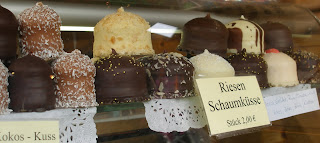
Every second store offers food either for the table or for immediate consumption. A firm favourite sells Schaumkusee – best described as a marshmallow mound covered in chocolate and coated with coconut, crushed almonds or simply more chocolate. You bite through the chocolate layer to a sweetly favoured mousse of airy sugar, so light that it almost disappears before you have tasted it. You finish with the waffle base.

At one point I see St Nicholas emerge from this stall, dressed in a long red gown trimmed with white fur. There are no reindeers in sight – I presume that he’s done a stop of shopping for the wife.

The main shopping strip is crowded and amidst all the people, my eye is attracted to a vision of red. Vivid red amaryllis stand erect, confident in their statue and elegance. Floral arrangements include candles and winter nuts and Christmas decorations. There are bundles of cinnamon to buy and pots of winter roses, all extraordinary.

Christmas is everywhere and the festivities would turn the most cynical into a devotee. At the medieval market at Wittels-bacher-platz, there is the gothic pageantry of the 14th century from furs to festoons and wood stove ovens, from which come paper thin pizzas with speck and leek.

At Falkenhof Lenggries, an earthenware dish of beef with potato dumplings leads to thoughts of a second helping and a definite return the following evening to eat a dish of warming beef favoured with paprika and cinnamon.

In the early evening, the markets suddenly become social as people meet up after work to sample mulled wine and eat bratwurst. People huddle together around the stalls, some with open fires.

With most markets closing at 9.00, this is the time to eat. The ravenous go to the stall advertising ½ metre of bratwurst or to the specialist markets, for traditional fair such as the medieval market.

Full of food and winter comfort, the day ends with some ice-skating at Prinzregentenstadion. For the novice skater, you can get help from a bear. Take hold of the ears, grab for dear life and push.

Christmas markets
Christmas Market at Marienplatz (27th November - 24th December 2009) Marienplatz; S-/U-Bahn Marienplatz. Opening hours: Mo - Fr 10am -8.30 pm, Sat 09 am- 8.30 pm, Sunday 10 am - 7.30 pm

Kripperlmarkt, one of the largest in Germany to specialise in cribs and other nativity accessories, is a short walk away on nearby Rindermarkt.


Medieval Christmas Market (26th November - 23rd December 2009) Wittelsbacher Platz (close to Odeonsplatz) Opening hours: daily 11am - 8 pm

Christmas Market at Residence (27th November - 22rd December 2009) Munich Residence, Entrance Residenzstrasse, Odeonsplatz) Opening hours: Mo-Sa 10am - 8.30 pm, So 10am-8.30pm

Christmas Market at Sendlinger Tor (27th November - 23nd December 2009) Sendlinger-Tor-Platz, U-Bahn Sendlinger Tor (center)Opening hours: daily. 10.30 am- 9 pm

Some of our favourite things
For some of the best people watching in Munchen, Schumann’s serves up German spectacle with an espresso on the side. The menu is spare and simple with an interior of uncomplicated lines and restrained textures. Located on the highly fashionable Odeonsplatz 6+7, this is the place to see and to be seen.

Post caffeine and style charge is the nearby Le Q. Combing the experience of day spa, homewares, interior design, hair salon and café, this boutique store is a statement in German exclusivity. From the one-off pieces of bespoke jewellery by Marjana von Berlepsch to the selected pieces of Limoges china, everything speaks style.

Behind Marienplatz near the main Christmas market is Dallmayr, the legendary food emporium. The windows displays evoke involuntary salivations with offers of caviar, champagne, blue mountain coffee and blends of exotic tea. Instead, it eclipses Harrods food hall in its blatant branding – the world of Dallmayr is literally the world of Dallmayr, few other labels exist.

Next door to Dallmayr is Manufactum for whom ‘the good things in life still exist’. So whether you are looking for the perfect pen, shoe horn, carpet, lamp fitting, spanner or saucepan, look no further. Manufactum brings new definition to DYI.

And finally, to Viktualienmarkt – the food market. Go the cheese vendor, Luigino’s Bui Feinkost Stand II, for some ripe Munster

For the larder
This wouldn’t be a travel entry from slower eater, if there wasn’t room dedicated in the suitcase to the ladder:

For some Christmas cheer, Oblaten- Lebkuchen mit Vollmilchschokolade – a gingerbread biscuit coated in dark colour and flavoured with hazelnuts and star anise; Marizanstollen, a Christmas tradition – a slightly dry, almost crumbling flattened cake, sweetened with marzipan, dried fruit and warm spices.

Waldheidelbeeren – blue berries in syrup and Pflaumen – plums in syrup – both from the local Aldi supermarket and for cakes and baking.

Orangen-Sent – an orange mustard to warm the belly and clear the nose in winter

Mandel Spekulatius or almond specoloo – a biscuit best eaten with expresso coffee.

Fichi carmellati all’Aceto Balsamico di Modena – fig paste (imported from Italy and recommended from our friendly guy at the Market. While there, we also brought Mostarada di Cipolle Rosse – red onion jam and a very ripe, to the point of intoxicating, washed rind Munster cheese.

A stocking filler from the food emporium, Dallymar, (the word food hall would fall to do it justice). Inside honey roasted almonds a wooden toy soldier; dark chocolate and gingerbread.
And finally to hang on our tree, silver balls from Leysieffer, filled with praline chocolates.
Dedicated to my Mum - who loves Christmas more than anyone I know.

Discovering Oysters

All in the name of slow

Monday, March 30, 2009

Lost in Bruges

It is the task of every foodie to eat and to eat well. So it was not without frustration that I found myself walking the streets of Bruges in search of a memorable meal.

My preparatory research had proved disappointing. Despite numerous googles, I had come up with very little, say for a few reviews from travel sites and some reader recommendations from TripAdviser.

I was unimpressed. Did no one eat in Bruges? Where were those trusted foodies that usually went before me, willing to share their secrets of a memorable meal?

For a city celebrated for its chocolate and beer, I found myself in the almost untenable position of not knowing where to eat. Yes, I could have given into a Michelin star but I’m generally not a fan of star ratings or their associated price tags.

No, I wanted something local —something to write home about.

For a city with more restaurants per square mile than any other European city (138 restaurants per square mile to be exact), I was a little dumbfounded. Would I be forced to eat pralines and drink Duvel all weekend? Or in the face of starvation, would I be forced to order from a tourist menu, one translated into English, French, German and Japanese.

It was thus with a sad heart that I approached dinner on Saturday night. The day trippers from Bruxelles had left the city, no doubt in search of a better meal. Restaurant upon restaurant all seemed to feature the same menu. The only difference was the prices. The closer to the city centre I ventured, the higher they rose.

I knew what I wanted to eat. It was just a case of finding it or so I told my very patient companion. And so we walked. From Markt to Gozeseputstraat back to Burg, until we finally chanced upon Restaurant De Koetse, just off Simon Stevin Plein.

We were famished by the time we arrived and promptly ordered the local beer – Brugse Zot, a very light ale, to help us study the menu. There was no choice – we wanted mussels or more precisely, Mossele - la biere de Bruges & crème (mussels cooked in beer and cream). We thought we were done until we spotted eel – aale im rahmssse (eel in cream sauce). Now this was something to write about.

There was a collective sign of relief. We knew that we were in for a good meal. This was quickly confirmed when we were served our apetitiser – preserved herring and a plate of sea snails, the size of pipis. The herring was infused with dill and the snails: meaty, very fresh and spicy on the palate.


As we relished what could only be described as a promising start, our eel arrived served in a wondrous, buttery rich sauce. Each piece tasted better than the next. Our enthusiasm must have been obvious, as we were given a second helping much to the detriment of the mossele that had arrived at the same time.

If I was looking to fault the meal, it would only be this. I can only imagine what the mussels would have been like, if we had eaten them on arrival. They had been cooked to perfection. Exceptional, even. The taste of parsley, celery, beer and cream, perfectly (yes, I use that word again) integrated; the ale being the most persistent of favours. The mussels were of the highest quality: fresh and succulent. The broth soaked up with rustic bread, delicious.

There was no dessert. After a day of sampling local chocolates, there was no need. In fact, we were content and exceptionally well feed.

Sloweaters guide to Bruges
Known as the Venice of the North, this city is celebrated for its canals, picturesque setting and UNESCO recognised medieval architecture. For all its quaintness, Bruges is the perfect weekender courtesy of the Eurostar from London. Three hours and you’re in a city celebrated for its architecture, chocolates, waffles, and beer.


WHERE TO EAT

To market, to market
It's the one thing that I crave when I'm in London, it's a good European market. So if you arrive before 13.00 on a Saturday morning, make your first stop - t'zand. It's close to the railway station and the perfect opportunity to buy some Belgium produce. The pound might be performing badly but the quality of food will be better than what you'd pay the same price for in London. If you are in Bruges during the week, you can see locals buy their fish at the outdoor market, Viz Markt.

For other take home items, take a walk along Dijver on either Saturday or Sunday afternoon (pictured above). You might find a set of Duvell beer glasses, a candelabrum or an example of the local handicraft. It is more flea market than antique fair, for that you'll need to cross the river to Galerij Bonart.

Among its many treasures and curiousities, you're likely to find a 1954 pressing of Rigaletto, that art nouveau tea set you have been looking for, or politically incorrect coffee memorabilia from the 1950s.

Galerij Bonart, Nieuwstraat 9, 8000 Brugge

When one bite isn't enough ... chocolate
There is chocolate and then there is chocolate.

With records dating back to 1693 showing the first order of chocolate from the chocolatier Maurice Scholle, you know this is a city that takes its chocolate serious. The line-up of chocolatiers is world famous: Damon, Leonidas, Dominique Persoone, Neuhaus.

Try to resist shopping at the big names and think more locally. Chololaterie Sukerbuyc, which translates as chocolate sugar belly, and the equally appealing, The Old Chocolate House, offer a more quintessential experience. With chocolates made on site, both seem closer to the family tradition of chocolate making in Bruges.

If you want a more modern experience, try Depla for its architectural showcasing of the art of chocolate.

The Chocolate House, Maria straat 1-800 Brugge, Chololaterie Sukerbuyc, Katelijnestraat 5, 8000 Brugge, Depla Chocolateir, Mariastraat 20, 8000 Brugge

Fries
We had ours from a portable shop in the main square - markt. They were crisp and hot, just the way fries should be. There’s a lot to be said for fresh hot oil. Be a traditionalist and get yours with mayonnaise unlike our fellow travellers who ordered theirs with curry sauce!

Go to one of twin take-away carts on the Market Square (Markt) at the base of the bell tower for your frites.


Delicatessens
For one of the best deli experiences, visit Diksmuids Boterhuis, the oldest food produce store in Brugge (pictured below).

Expert knowledge of local cheeses and small goods has been nurtured by this one family for the last 75 years.

We selected a local brie from Damme, five kilometres away from Brugge, and Abdijkaas. We wanted something local that would travel well – in fact, we were told not to put either cheese in the fridge as they would last for 4-6 weeks respectively.

On the shelves, we also found speculoos, the traditional Beligium biscuit first eaten on the feast of Saint Nicolas. A selection of the delicacies that you will find in Diksmuids Boterhuis, including the thirty regional goat cheeses that they have on offer.

Also try Deldycke, for another impressive selection of chocolate, wines and local cheeses.

Diksmuids Boterhuis, Geldmunstraat 23, Brugge
Deldycke, Wollestraat 23, Brugge

WHERE TO DRINK
With over 400 different types of beer to choose from, you're more likely to run out of drinking time than choices. Try one of the popular blanche beers such as Hoegaarden or the local ale, Bruges - Zot. Also try Chimay, one of the trappist beers. There are only a dozen or so abbey brewies in Europe, six are Trappist and all located in Belgium.

Staminee de Garre, De Garre 1 Brugge; t'Brugs Beertje, Kemelstraat 58000 Brugge.

WHAT TO SEE
The city of Bruges is one of its best attractions but for those who want to cultivate their culinary knowledge, go to the Chocolate Museum. This is a fascinating museum: a testament to the highly addictive nature of chocolate. Start your tour by studying Atzec and Maya cultures, before travelling to Spain and reading how it was the Oaxaca nuns who first added sugar to drinking chocolate.

Wijnzakstraat 2 (Sint-Jansplein)8000 Bruges

Thank you: As always, a special thank you to my travelling companion and fellow sloweater, LBM.

Tuesday, December 09, 2008

Winter spaland: Baden-Baden

Baden-Baden has long attracted the European jet set. But it is not for the celebrity sightings that you go to this town in the famous Black Forest region, it is to enjoy the waters of Caracalla and Friedrichsbad spa complexes.

The benefits of taking the waters at Baden-Baden are centuries old, begun by the Romans who understood a thing or two about the pleasurable necessities of bathing. Since then, everyone from Tolstoy to WAGs have enjoyed the region’s mineral springs. So much so, that the name of the town, roughly translated as bath-bath, is said to mean double the bathing pleasure!

Friedrichsbad Roman-Irish Bath is the eldest of the two complexes. It first opened in 1877 and for the last 130 or so years, people have taken enthusiastically to its waters. Famously Mark Twain said of the place: “Here at the Friedrichsbad you lose track of time within 10 minutes and track of the world within 20...”.

It is easy to appreciate his sentiments in this setting of Belle Epoch elegance. The complex of marble stone, pools and painted frescos is a temple to the art of bathing. It is worth visiting just for the architecture but be prepared to go textile free (nude). There are 17 different stages to this spa experience that combine roman bathing culture with Irish hot-air baths. Bathing begins with a preparatory thermal shower and is followed by a soap scrub and massage and a series of steam spring baths. Bathing is segregated for most of the spa experience, with the exception of Sundays, where bathing is mixed.

In contrast, Caracalla Therme Spa offers a more modern experience to those seeking the benefits of taking the waters. Begin with the outdoor pool heated to body temperature. In the winter, the steam rises up from the warm water, lowering visibility to a metre. As you move through the water, bodies seem to appear from nowhere and the effect is almost surreal. Sit in the main spa for a rigorous start to your therapy. Be patient, the spas alternate every six minutes, so just sit back and relax until the spa starts. Cure your aches or pains, by standing beneath one of the waterfalls and be showered by plummeting hot water in this watery grotto. You'll feel like you've just had a deep tissue massage.

Feel relaxed? Move onto the second pool heated to a more temperate 32˚C. The attraction of this spa is the whirlpool that picks you up and carries you around the pool’s edge.


Several options await you when you return inside. You can either relax in the mineral pool or warm up by going for a dip in the 40˚C heated pool. This watery sauna heats the body and readies you for one of the most thrilling of therapeutic pleasures– the cool pool (18˚C). Your limbs with tingle as you plunge from the hot to the cool pool, then back again. This shocking of the body is said to be most therapeutic as it stimulates the body’s circulation.

To regain your composure, visit the inhalation room said to rehydrate the body after these extremes. From there, breathe deeply the rosemary and lavender oils of the steam bath. Patrons are invited to sit quietly, lulled by piped music and the heat. Stand by the fountain to get the most out of this aromatherapy experience. Conclude your spa experience by laying under the sun lamps – an essential for the winter climate. You will need at least three hours to enjoy this experience. Easily done at the very affordable cost of €13 .

Dinner at Gasthaus Löwenbräu in the evening with its winter wonderland of reindeer, santas and christmas trees will provide you with a memorable evening of Christmas kitsch. You’ll find the food hearty – think game goulash and potatoes dumplings. Staff are dressed in traditional German costume: it is all very heimlich. If the indulgence of either Caracalla or Friedrichsbad was not enough, then dine at the Michelin star restaurant, Park Restaurant at Brenners.


Christmas fare at Gasthaus Löwenbräu
From early December, Baden-Baden is home to a Christmas market. Rug up, put on your faux fur (or your real one), and enjoy a mulled wine or a local beer, perfect to wash down some good German fare, like dumplings with speck and sauerkraut. There are some good local delicacies to discover like wild boar salami and wildschweinbockwurst. These treats are the perfect size for your carry-on luggage and you’ll relish them during the northern cold months that are to follow.


Local delicacies from the Baden-Baden Christmas market

Near the market is Rumpelmayer. This is the place to buy your gingerbread house to celebrate the season. If it gets too cold, retire to the café inside the old pump house, The Trinkhalle. Art Deco in style, this café has all the feelings of a traditional coffee house with its hanging newspapers and lustred wood interior. On a sunny winter day, the light seems almost golden. Order a simple platter of cheese and your afternoon will simply pass by. While the interior is warm and inviting, there is always the option to sit outside and be tres European. Don the designer sunglasses, winter coat and gloves, and look chic.


Gingerbread Christmas houses from Rumpelmayer

Baden-Baden is an accessories city, so if you are looking to indulge this is the place to do it. There are numerous boutiques offering designer sunglasses and eye wear, watches and jewellery. But if you are looking for something a little more unique, then explore the two emporiums that specialize in art deco furniture and wares. From bracelets through to lamps and cocktail cabinets, you’ll find what you are looking for.

With its understated elegance, two luxurious spa complexes and boutique hotels, Baden-Baden is the perfect way to warn off the London winter blues.

Sloweater guide to Baden-Baden

Where to stay
Hotels in Baden-Baden are said to the most expensive in Germany. There are many to choose from but these are our favourites:

Brenner’s Park: For an experience that gets the golden nod from Conde Nast Traveler, Brenner’s Park – Hotel & Spa is our number one choice. From the Park-Restaurant to its private spa complex, you will enjoy the attentiveness to detail, the elegant décor and the unrestrained luxury.
Schillerstraße 4/6, 76530 Baden-Baden

Bad Hotel zum Hirsch: The recent makeover of this member of the Heliopark group is one of understated elegance. This hotel is the perfect location from which to explore the town centre and walk to the nearby spas.
Hirschstraße 1, 76530 Baden-Baden

Bad Hotel zum Hirsch

What to do
"There's not a lot to do in Baden-Baden" was the advice that I was given when discussing my holiday destination. "You go there to relax, eat and drink." Never have wiser words been spoken, and so I did.

Friedrichsbad Roman-Irish Bath: You will experience the joys of the Belle Epoch as never before as you move from one spa to the next. Friedrichsbad has welcomed many to its waters: enjoy the experience and return home tranquil, if not comatose.
Römerplatz 1, Baden-Baden

Caracalla Therme Spa: This modern shrine to roman bathing is popular with families. Relax in the aroma steam room and let the hours sip away as you move from one pool to the next. It is very busy on the weekend, so come early or fly in midweek, where you are guaranteed to almost have the baths to yourself.
Römerplatz 1, 76530 Baden-Baden

Other distractions
Casino Baden-Baden Spielbank: Marlene Dietrich described it as the most beautiful casino in the world. See for yourself and while you are there pretend you’re a member of the European jet set and take a gamble.
Kaiserallee 1, 76530 Baden-Baden

Special thanks to LBM, my co-conspirator. Thanks for a wonderful weekend.