Tuesday, December 09, 2008

Winter spaland: Baden-Baden

Baden-Baden has long attracted the European jet set. But it is not for the celebrity sightings that you go to this town in the famous Black Forest region, it is to enjoy the waters of Caracalla and Friedrichsbad spa complexes.

The benefits of taking the waters at Baden-Baden are centuries old, begun by the Romans who understood a thing or two about the pleasurable necessities of bathing. Since then, everyone from Tolstoy to WAGs have enjoyed the region’s mineral springs. So much so, that the name of the town, roughly translated as bath-bath, is said to mean double the bathing pleasure!

Friedrichsbad Roman-Irish Bath is the eldest of the two complexes. It first opened in 1877 and for the last 130 or so years, people have taken enthusiastically to its waters. Famously Mark Twain said of the place: “Here at the Friedrichsbad you lose track of time within 10 minutes and track of the world within 20...”.

It is easy to appreciate his sentiments in this setting of Belle Epoch elegance. The complex of marble stone, pools and painted frescos is a temple to the art of bathing. It is worth visiting just for the architecture but be prepared to go textile free (nude). There are 17 different stages to this spa experience that combine roman bathing culture with Irish hot-air baths. Bathing begins with a preparatory thermal shower and is followed by a soap scrub and massage and a series of steam spring baths. Bathing is segregated for most of the spa experience, with the exception of Sundays, where bathing is mixed.

In contrast, Caracalla Therme Spa offers a more modern experience to those seeking the benefits of taking the waters. Begin with the outdoor pool heated to body temperature. In the winter, the steam rises up from the warm water, lowering visibility to a metre. As you move through the water, bodies seem to appear from nowhere and the effect is almost surreal. Sit in the main spa for a rigorous start to your therapy. Be patient, the spas alternate every six minutes, so just sit back and relax until the spa starts. Cure your aches or pains, by standing beneath one of the waterfalls and be showered by plummeting hot water in this watery grotto. You'll feel like you've just had a deep tissue massage.

Feel relaxed? Move onto the second pool heated to a more temperate 32˚C. The attraction of this spa is the whirlpool that picks you up and carries you around the pool’s edge.


Several options await you when you return inside. You can either relax in the mineral pool or warm up by going for a dip in the 40˚C heated pool. This watery sauna heats the body and readies you for one of the most thrilling of therapeutic pleasures– the cool pool (18˚C). Your limbs with tingle as you plunge from the hot to the cool pool, then back again. This shocking of the body is said to be most therapeutic as it stimulates the body’s circulation.

To regain your composure, visit the inhalation room said to rehydrate the body after these extremes. From there, breathe deeply the rosemary and lavender oils of the steam bath. Patrons are invited to sit quietly, lulled by piped music and the heat. Stand by the fountain to get the most out of this aromatherapy experience. Conclude your spa experience by laying under the sun lamps – an essential for the winter climate. You will need at least three hours to enjoy this experience. Easily done at the very affordable cost of €13 .

Dinner at Gasthaus Löwenbräu in the evening with its winter wonderland of reindeer, santas and christmas trees will provide you with a memorable evening of Christmas kitsch. You’ll find the food hearty – think game goulash and potatoes dumplings. Staff are dressed in traditional German costume: it is all very heimlich. If the indulgence of either Caracalla or Friedrichsbad was not enough, then dine at the Michelin star restaurant, Park Restaurant at Brenners.


Christmas fare at Gasthaus Löwenbräu
From early December, Baden-Baden is home to a Christmas market. Rug up, put on your faux fur (or your real one), and enjoy a mulled wine or a local beer, perfect to wash down some good German fare, like dumplings with speck and sauerkraut. There are some good local delicacies to discover like wild boar salami and wildschweinbockwurst. These treats are the perfect size for your carry-on luggage and you’ll relish them during the northern cold months that are to follow.


Local delicacies from the Baden-Baden Christmas market

Near the market is Rumpelmayer. This is the place to buy your gingerbread house to celebrate the season. If it gets too cold, retire to the café inside the old pump house, The Trinkhalle. Art Deco in style, this café has all the feelings of a traditional coffee house with its hanging newspapers and lustred wood interior. On a sunny winter day, the light seems almost golden. Order a simple platter of cheese and your afternoon will simply pass by. While the interior is warm and inviting, there is always the option to sit outside and be tres European. Don the designer sunglasses, winter coat and gloves, and look chic.


Gingerbread Christmas houses from Rumpelmayer

Baden-Baden is an accessories city, so if you are looking to indulge this is the place to do it. There are numerous boutiques offering designer sunglasses and eye wear, watches and jewellery. But if you are looking for something a little more unique, then explore the two emporiums that specialize in art deco furniture and wares. From bracelets through to lamps and cocktail cabinets, you’ll find what you are looking for.

With its understated elegance, two luxurious spa complexes and boutique hotels, Baden-Baden is the perfect way to warn off the London winter blues.

Sloweater guide to Baden-Baden

Where to stay
Hotels in Baden-Baden are said to the most expensive in Germany. There are many to choose from but these are our favourites:

Brenner’s Park: For an experience that gets the golden nod from Conde Nast Traveler, Brenner’s Park – Hotel & Spa is our number one choice. From the Park-Restaurant to its private spa complex, you will enjoy the attentiveness to detail, the elegant décor and the unrestrained luxury.
Schillerstraße 4/6, 76530 Baden-Baden

Bad Hotel zum Hirsch: The recent makeover of this member of the Heliopark group is one of understated elegance. This hotel is the perfect location from which to explore the town centre and walk to the nearby spas.
Hirschstraße 1, 76530 Baden-Baden

Bad Hotel zum Hirsch

What to do
"There's not a lot to do in Baden-Baden" was the advice that I was given when discussing my holiday destination. "You go there to relax, eat and drink." Never have wiser words been spoken, and so I did.

Friedrichsbad Roman-Irish Bath: You will experience the joys of the Belle Epoch as never before as you move from one spa to the next. Friedrichsbad has welcomed many to its waters: enjoy the experience and return home tranquil, if not comatose.
Römerplatz 1, Baden-Baden

Caracalla Therme Spa: This modern shrine to roman bathing is popular with families. Relax in the aroma steam room and let the hours sip away as you move from one pool to the next. It is very busy on the weekend, so come early or fly in midweek, where you are guaranteed to almost have the baths to yourself.
Römerplatz 1, 76530 Baden-Baden

Other distractions
Casino Baden-Baden Spielbank: Marlene Dietrich described it as the most beautiful casino in the world. See for yourself and while you are there pretend you’re a member of the European jet set and take a gamble.
Kaiserallee 1, 76530 Baden-Baden

Special thanks to LBM, my co-conspirator. Thanks for a wonderful weekend.

Sunday, May 25, 2008

48 hours in Lisbon

Lisbon had never been on my list of places to see before I die.

Buenos Aires, yes.
Sardinia, yes.
Berlin, yes.
Lisbon, ... well, no.

So it was without any great expectations that I arrived there, lured by a very cheap easyjet flight.

Fourty-eight hours later, I can tell you my top 100 needs revising.

Lisbon is a city ideal for people like me who like to travel without fixed itineraries. It is a city to get lost in without the normal tourist crowds and buses.

This is not to say that there isn't any tourism. There is but overall Lisbon is a city that has refused to be lured by the European tourist circuit. This is a city that prefers to be lived in rather than visited.

All good holidays start with food, and mine begins with the Mercado Ribeira. By the time I arrive, the varinas or fish wives have already put out their fish. Of the catch of the day, it is the prehistoric looking peixe espada (scabbard fish) with its silver foil scales and sharp teeth that catchs my attention.

Unlike many markets in Europe, this market is quiet. The normal hordes of tourists are missing and there are no local specialities vacuum-packed waiting to be sent home. There are just locals shopping. Walking from aisle to aisle, I enjoy an impromptu lesson in Portuguese cooking. All the ingredients for caldo verde and pasteis de bacalhau are there ready for the kitchen.

Nearby, on Rua das Flores, is Carvoaria, a workers canteen opens daily from 12 noon to 3.00 pm. I've been told to arrive early as the place fills quickly. I'm not surprised as the the food is good and very cheap. I select my lunch from the prato dos dias, and order sardinhas assadas with a salada mista and then sit and watch my fellow diners. There are university students, local businessmen and locals. No tourists.

My sardines arrive encrusted in rock salt and cooked on an open-grill. They prove to be one of the best meals that I have ever eaten. Not only are they fresh but the smokiness of the grill combined with the salt and crisp skin of the fish is ... words escape me.


I savour each one, almost to the point of drawing attention to myself. I linger over all four of them, eating slowly in appreciation of each mouthful. If I was ever in any doubt, I know why I travel – I travel to eat.

Post lunch, I head toward Chiado famed for its elegant shopping and A Brasileira. On Rua Garrett, this café has been a favourite with intellectuals and writers since it opened. There is a faint smell of cigar tobacco and its wooden panelled interior has lost none of its lustre. The original painted panels overhead are unmistakable in their Art Nouveau style. This is the perfect place to rest and sample one of many patesis de nata.


Beyond Baixa with its elegance streets is Alfama. During the day it is an uneventful neighbourhood. Off the well worn path of Rua de Sao Joao da Praca near the cathedral , the streets become even quieter. There are very few tourists walking these paved streets of Lisbon. There is only the sound of your own footsteps and of families lunching and dishes being washed behind closed doors. Each corner offers a new sight, such as this grafitti near San Miguel.

The streets are deserted and it’s an opportunity for me to simply meander. Alfama is a labyrinthine of streets, of neighbourhoods within neighbourhoods.

My destination in Alfama is Castelo de Sāo Jorge, a 11th century fort that is a reminder of the presence of Moors in Portugal. On this Sunday afternoon the fort has welcomed some contemporary invaders in the form of mercado mundo mix, a fair of contemporary design from the local college. A DJ mixes the sounds of flamenco and salsa and store holders happily look on despite the inclement weather.

It is easy to spend several hours here, walking through the streets that line the fort.

Beyond some tourist shops selling the famed Lisbon cockerel and titles, the neighbour belongs to its inhabitants rather than tourists. A rooftop café made up of what looks like a make-shift bar and deckchairs belies the contemporary life of Lisbon. This café with no name offers one of the best views of this city.

The neighbourhood of Alfama is perhaps the best neighbourhood for fado and it is worth finding one of the smaller houses to spend an evening discovering this music. At A Baiuca, a small restaurant off Rua de Sao Pedro, I experience this rich heritage. To hear fado is to be told a story. The translation of fado is fate and it is a celebration of what has been lost and what has never been attained. Its poignancy comes from this.

In this small and very overcrowded fado house, these songs of melancholic yearnings are shared. The man who greets us at the door joins with another two men to sing Teiquei rinrha. There are no professional singers and there is no tourist menu.

Late in the evening, our hostess sings and I’m told one of the kitchen-hands sang the night before. It is a local place and during the night more singers will appear at the door and sing fado before leaving again. They greet one another, old friends.

A young woman in her early twenties is encouraged to sing. She does somewhat nervously at first, before she gains confidence and her voice rings out mournful and sad. There is no translation and the depth of the music touches the heart as her voice reaches out across the room and into the small square outside.

Perhaps our best journeys are the unexpected ones. It is those wrong turns, closed signs and misread maps that take us to places beyond familiar guide books into local neighbourhoods. Having never been a great map reader, I find myself lost and in Estrella, a neighbourhood that doesn’t even rate a mention in some guidebooks.

Thinking the fort is behind me, I head south hoping that I will find the centre of town. What I find instead is the religious celebrations of Corpus Christi (the Catholic feast of Pentecost).

In the houses overhead, locals have hung blankets from their balconies. Families line the small streets holding lit candles and lavender. Rose petals are thrown when one of the many religious statues are paraded by, escorted by local bands and lead by local religious fraternities and orders.

The statue of Mary is carried by pall-bearers. Her mount is a bed of orchids and roses. The smell of these blush blooms is lost in the more pungent smell of ripe lavender that has become more intoxicating as it is dropped by the faithful and crushed underfoot.

The statue of Mary moves slowly by, slowed prematurely by the band ahead of her. Her encrusted mantle of sky blue cloth is richly embroidered and on her face, an expression of serenity that has remained the same for centuries. She is followed by Saint Steven, his torso pierced by the arrows of his tormentors. He too looks ahead, beyond the crowd.


The parade will last for several more hours. The faithful will join the line and follow the crowd through the winding streets further into the heart of the city.

In a city famed for its patesis de nata, the word Antiga Confeitaria dé Belem has become synonymous with the pastries known more commonly as portuguese tarts.

Take train 15 to this cafe. The best way to eat a pastéis is with uma bica (strong black express coffee). This bakery has the reputation for being Lisbon’s best. The bakery now makes 16,000 tarts a day based on a recipe that is 170 years old.

Don’t be deterred by the crowd. Wait until they bring a fresh tray of tarts from the ovens. A patesis still warm is wonderful. The custard is rich as is the flakly pastry. Sprinkle with icing sugar and cinnamon.

While you are in Belem, visit the Monument of the Discoveries, a public statue erected in 1960 to celebrate the 500th anniversary of Henry the Navigator. The 150 metre high monument is an epic statement about Portugal‘s rich maritime past as is the mosaic behind it showing the Portuguese discoveries of the 15th and 16th centuries.

A further walk along the coast time will bring you to Torres de Belem built in the 1500s. Now it sits strangely close to the shoreline, the result of reclaimed land. This famous landmark is a fortress made in the Gothic style and is a grand statement of the legacy of Manuel I. Stop off at Mosteiro dos Jerōnimos on your way back to the centre of town. This monastery built using taxes from pepper money is another celebrated example of Manueline architecture.

Before you leave Lisbon, go to O Bacalhoeiro a Licorista, just off the Rua Augusta in Baixa. I have strange suspicion that this is a local fraternity devoted to all things bacalhau. This is the place to order bacalhau cozido.

Your dish will arrive rather unceremoniously – a piece of cod, boiled potatoes, chickpeas and a single egg. Watch the locals turn these uninviting ingredients into a celebration of this wonderous fish. Flake the cod, removing all the skin and any bones. Mix in the chickpeas, potatoes and parsley and dress with olive oil. As for the egg, that is left on the side. Order a Super Bock beer and you’ve become a member.

SLOWEATER guide to Lisbon

Where to drink
Bar with no name
Travessa do Chao do Loureiro, Alfama
This place was closing just as I was arriving but the view, however shortlived, was perfect. The sun had come out and reclined on one of the modernist deckchairs I looked across the skyline of Lisbon. Perfect.

Solar do Vinho (Port Wine Institute)
Rua de Sao Pedro de Alcantara 45
For an advanced study in port of all vintages and varieties, this is the place for some serious study, including the famous Grahams, bottled by the Symington family!

Where to eat
Carvoaria
6 Rua des Flores
The first time I turned up, I reasoned it was another traveller’s experience of the lunch that got away. Informamos os nossos estimados clientes que … or so read the sign. Never being one to give up or lose sight of the opportunity to eat a good lunch, I persisted and returned the next day. The result, one of the most fabulous meals I have ever eaten.

O Bacalhoeiro a Licorista
Rua dos Sapateiros,Baixa
Your meal will begin with pasteis de bacalhau, fried bacalhau and potato patties. This unpretentious restaurant is always busy. Order the bacalahau coido and watch the locals to turn this into an appetizing dish. If you can try to the Pudim de Oros. It is the portugese equivalent of a crème caramel only with port and sugar. The question is who or what is Campanhia Portuguezza de Licoreis?

Café de Sapa, Sintra
There are many imitators on the road side, so beware. Instead enjoy your first taste of a queijadas, a local speciality made with either cheese or an almond meal. From the inside of this café I first sited the Palacio Nacional de Sintra, immediately recognisable by its famed conical chimneys. This place is easy to find as it is the only café, once you are on the road to the old town from the train station.

Where to shop
Luvas
Rua do Carmo 87a, Chiado
Lisbon is not famed for its shopping but it is worth finding this specialist glove shop. It is little more than an entry and there is only room for one customer at a time. The gloves are all hand-made.

Fabrica Sant’ Anna
Rua do Alecrim 95, Chiado
Portugal is famed for its cermaics and this shop is one of many through the city where you can purchase that must-have bowl or platter to take home. My advice: take your credit card.


In memory of Bill McLennan, my grandfather, a man who liked to travel and tell stories.

Monday, January 07, 2008

In search of a good lunch

I’m not one to argue with an Italian who is passionate about his food, especially one who has had lunch at the same place for the last thirty-five years.

I was just getting ready to order when Angelo grabbed my arm. Leaning in, he stated, ‘It’s the only place left in Florence. You eat anywhere else and you’ll pay seven times as much and the food will be … and then you’ll die. I kid you not.’

I had turned up early as I was in desperate need of some good food. Tuscany had been a disappointment. Places were either closed for the holidays or overpriced. So it was with a sigh of relief that I was lead to the last available seat looking out onto the piazza di mercato centrale at Da Mario. It was here that I found Angelo, already in residence and holding court. He was clearly a regular as well known as this local osteria with its successive slow food awards.

He barked his lunch order, gave instructions on what to eat and drink. His conversation was rapid as he shifted between Italian and impressive English, talking with everyone and to anyone around him. People stopped to say hello and I was introduced to all, including a member of the New York Mafia at the next table who assured me that next time I came to New York I would get a table at his restaurant.

Lunch was simple fare. There was a menu somewhere but Angelo found it easier just to say what was on offer. I was told to order papppardelle alla lepre (a wild hare sauce) with the peposo (a slow cooked beef stew) to follow. He would also have the pasta but had it on good authority that the bistecca was exceptional (better than normal, which was always exceptional). A piece of bread was unceremoniously dropped on the table with a small carafe of house red. I was familiar with the bread – a regional speciality made without salt, the perfect way to soak up any leftover sauce. The wine was warming and spicy and would prove the perfect beginning to an afternoon of slow eating.

The lepre arrived shortly after the first carafe of red wine had been emptied. My lesson on regional Tuscan food now started with a bottle of Chianti Classico from Montepulciano served from an ottovino (a small serving glass, one eighth of a litre of wine). This now curiosity was found in the cellar to illustrate to me the importance of the award recently won by Da Mario (the award for best trattoria in Italy was in the shape of a ottovino). Much later we would leave the subject of food and wine and turn to that other great Italian subject, love.

The sugo had clearly been cooking for hours, so succulent and pronounced was it in taste. It was rich without being overpowering, each mouthful revealing a further depth of flavour that made you want more. I savoured the sauce like a wine detecting a note of cinnamon among the tomato, wine and hare. The pasta was a papparelle, wide sinuous ribbons, perfect to pick up the juices. It was uncomplicated, served as is, a simple statement of good food.

The peposo followed: mine a mezzo (half serve) and another bottle of Chianti opened. The noise of the osteria quietened as the crowd settled into the ritual of lunch. This was a dish worthy of veneration. It was hot, spicy, astonishing. The meat fell away with the slightest touch of my fork. The sauce had a rich lustre and a contentment and happiness came with each mouthful. No wonder it was the favoured dish of the tilemakers who worked on Bruneschilli’s Il Duomo. Supposed they cooked the dish for hours in a kiln before breaking for lunch.


Romeo came to the table for a small glass of wine. ‘He is my friend, a real friend’, said Angelo of the chef. I noted the snail on the lapel of his whites, the symbol of the slow food movement. He had started cooking the peposo at seven that morning and six hours later I was eating it. Its flavour was robust, developed. ‘Not like those restaurants where the cooking starts ten minutes before they open’, was Angelo’s response to my rapturous appreciation of the dish.

The afternoon became progressively hazy as you would expect from a three hour lunch. Sometime later, after vino santo (dessert wine) and almond biscotti, we left: I to the airport and Angelo for an expresso.

‘Next time you are in Florence, come back. I’m always here from twelve at the same table’.

Da Mario, Via Rosina 2r, Florence (opposite the central market), Open 12.00 – 15.30 Tel: 055 218550 Special thanks to my dining companion, Angelo - he with the name of an angel and the surname of war. See you next time I'm in Firenze.
Recipe for Peposo
1 kg of lean beef stew meat
10 cloves of garlic
2 tbs of freshly ground black pepper
1 can of diced tomatoes
2-3 cups of Chianti red wine

Place everything into the one pot and cook slowly, very slowly. Five to six hours is just enough and then allow another three for lunch.


Quick guide to Florence

Even in Florence, the most tourist of Italian cities, you can find yourself a little dolce vita.

Head to areas such as Oltrarno and San Marco and you’ll discover a city that belongs to the Italians rather than tourists. Eat at the local osterias, shop at the markets and stores that Italians frequent and walk through a city that is remarking unchanged since its Renaissance.

Where to eat
The much awarded Da Mario is one of the last authentic osterias in Florence. Open for lunch only, this is the place to eat and savour seasonal Tuscan food such as lepre fagiano and the famed bistella served with a wedge of lemon. Come at 12 o’clock to avoid queuing and look out for Angelo. He will be seated at the table by the front window. Via Rosina 2r, Florence (opposite the central market)

Go hungry was the recommendation that came from two strangers on a train back from Pisa when I asked them to tell me their favourite restaurant in Florence. I Latini is a much loved favourite, with its generous servings and hospitality. Some say it’s a little overpriced but in a city of expensive and often very poor food, it deserves its reputation as a place for good food. Don't be deterred if you can't find the street on your map of Florence. Most of the smaller streets aren't listed. Just head in the general area and keep on walking. If you really get lost, just ask Dove I Latini and someone will point you in the right direction or give you directions in English!! Via dei Palchetti 6r, Florence Tel: 055 210916


Never let it be said that distance is an obstacle to getting a good lunch. A day trip to Lucca is the perfect excuse (if you needed one) to dine at I Santi Vineria, a small wine bar off the main piazza. Order i testaroli con pesto, a dish typical of the north-eastern area of Tuscany. The pasta is made from flour and water and then baked in a large heavy dish. The texture is like a foccacia and goes perfectly with the pesto made from famed basil from Lunigiana. Via dell'Anfiteatro, 20A, Lucca Tel: 0583 316116

This is the story of the lunch that got away. At 13.00, Osteria Il Carroccio was full and it was still full an hour and half later when I returned desperately hungry. The food would have been worth the wait as opposed to the very expensive and so so meal I had at a nearby trattoria. But yes, back to the osteria, this is the lunch that I would have ordered. For primo piatti, risotto al radicchio rosso porcini (risotto with red chicory and porcini mushrooms) and for secondo, pappardelle al cinghiale (large ribbon noodles with wild board sauce). The moral of this story is always book a table on a Sunday in Italy! Via del Casato di Sotto 32, Siena Tel:0577 271255

Where to drink
In a city full of bars, you will never be short of a drink but I Fratellini is unique. This is one of the last hole-in-the-walls left in Florence. Place your order at the counter and then stand around like every else enjoying one of the local chiantis. If you are game, try panino no. 22 lardo di colonnata (pig lard, another Tuscan favourite) but failing that no 22, pecorino tartufo e rucola (pecorino chesse with truffle) with a drizzling of fresh olive oil is very very good. Via ei Cimatori 38r, Firenze. Mon–Sat. Tel:055 2396096.

For another neighbourhood favourite, go to All’antico Vinaio. Most evenings it is standing room only but don’t worry the wait for a seat tends to be short. Locals meet at this bar for a quick chat before heading home or out for their main meal. There is a limited but excellent selection of crostini. Try the gorgonzola. It’s self-serve and relaxed like the bar itself. This is a place to enjoy and listen to the locals. Via de’Neri, 65, Firenze. Tues – Sunday. No telephone.

The view from Forte di Belvedere is definitely worth the climb, as is the wine bar, Enoteca Fuori Porta, that you reach after a steep walk along the old city walls. A glass of 2004 Belguardo comes highly recommended as does the crostini con proscutto crudo e crema di tartufo e gorgonzola. The selection of wine is impressive, the atmosphere is warming. This is the perfect place for a memorable lunch. Via Monte alle Croci, 10r 50125 Firenze Tel : 055 23 42 483

Where to shop
Florence is the city of leather. Along the streets lining the Mercato Centrale and at the Mercato Nuovo, you will find leather as far as the eye can see as well as other tourist essentials – marbled paper, miniature statues of David, painted ceramics and italia t-shirts. For better quality and more expensive leather, walk around the small shopping district near the Ponte Vecchio walking towards Santa Trinita. For high end designer products, go straight to Via Strozzi.

If bling is more your thing, then the Ponte Vecchio is your destination. This famous landmark was once the home to the tanners of the city, before one of the Medicis took offence to the smell. This is the place to spend serious money but the artistry of the jewellery is obvious, if not somewhat gaudy.

No trip to Florence would be complete without a trip to Santa Maria Novella Farmacia. Established in 1527 by Dominican monks, it still sells herbal remedies as well as its famous soaps said to be the finest in the world. Via della Scala 16, Santa Maria Novella Tel: 055 216 276

Mercato Centrale is the place to stock up on all those essentials that are incredibly overpriced elsewhere. This is the main market of Florence, so it is wonderfully noisy and overcrowded with locals just doing their own thing.
You'll see Italian food at its best here - seasonal hams encrusted with peppercorns, rosemary and garlic; mustard fruits; pestos and fresh pastas; enough truffle products to satisfy any foodie or truffle pig. The ground floor is dedicated to small goods, cheeses, meats; upstairs, to fruit and vegetables.
Follow your nose to the porcini mushroom stall – the prices range from €8 - € 10 per 100 grams, the most expensive being for the larger ceps.

Saturday, December 08, 2007

Dèfaire l'amour

The height of decadence: a day in Paris with my dearest and perhaps strangest of friends, Warren (as you'll see...)

Saturday, November 10, 2007

Tales from Vienna: Cigarettes, kaffee, kunst


Jetlag am sonntag
We arrived early, perhaps too early.

The only sound was that of a lonely jazz track and the barman taking orders. It was a quiet night, he told us, looking at the couples on the lounges. He was right. They gave the bar an atmosphere of exclusion that allowed for neither conversation nor diversion.

So we sat at the bar and listened to Philippe. His last job was working at a former speakeasy in Paris. It was down a side street from the Lourve. ‘Had we been to Paris? I’ll give you the address. You’d like it.’
And so the conversation went.

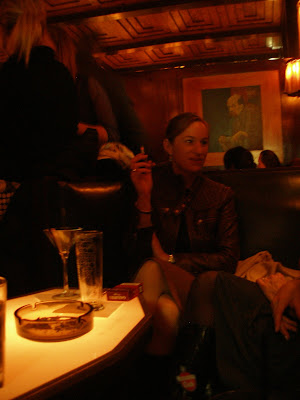
The bar glistened and a bottle of Talisker single malt caught the light from the muted wall lighting. The bar had the feeling of a film noir set, of anticipation and suspense. Smoke clung to every surface, yellowed the light before unwillingly disappearing outside through the vents in the tortoiseshell windows.

It was going to be a night where either nothing or something happened.


More people joined us at the bar and the conversation was as generous as the drinks. Phillippe turned his attention from us, two travellers, to a group of business men. They had replaced one of the couples and were sitting intently, huddled as if to protect a shared secret.

Beside us, a couple sat. He drew on his cigar with the expertise of a man well acquainted with a good Cuban and his blonde companion stared blankly into space. We watched him in the bar mirror, admiring his technique and his vanitas.

By midnight and several mojitos later, the crowd had settled in for the evening. Two men hovered near a group of women, attempting to make eye contact as a necessary prelude to an introduction. The couple to our right had disappeared into the night and another anonymous couple replaced them and looked fugitively towards the lounge.

We were about to leave, when suddenly Phillippe rushed from behind the bar. There was a commotion. People looked around in confusion as our barman grabbed a man that was attempting to flee down a narrow stairway to the public telephone. An arm lock turned into a body hug as our barman dragged the man across the bar into the side street. No words were spoken.
The explanation came from another, a local at the other end of the bar. We exchanged looks. ‘He was in here last night. He was told not to come back.’. I wondered why but the man had returned to his drink and so did I. Conversation over.

As for Phillipe, he was talking to a couple at the bar. ‘Have you been to Paris? I know a great little bar. I’ll give you the address. You’d like it.’

And so the conversation went.

Kaffee
So dark was the inside that it took several seconds for the shadows to become people. It was late in the day and most of the light now came from the inside lighting. Every surface was stained a muted yellow, as heavy as the smoke that saturated the air. Like its legendary owners, the café had the appearance of timelessness. It has survived two world wars and a mission to the Russian front. This was one of the great kaffeehauses of Vienna, Café Hawelka.

I was seated like everyone else at the first available table. There was no menu, so I just asked for kaffee. ‘Melange’, the waiter asked accusingly. I nodded. Cake? ‘There’s no cake left. It’s finished for the day. Best to come earlier.’

It was busy. The sound of dishes could be heard from the back of the café. Waiters dressed in the traditional tuxedo moved between the tables, taking orders. More people arrived and were seated wherever there was room. She was one of them and she would have easily blended into the busy Sunday afternoon crowd except for her tangible anxiousness.


She had the look of an Egon Schiele painting. In her appearance, she was haunted and drained like the parched wood of the café, her face as yellowed as the cigarette stains and smoke. She was a fugitive from herself. Her eyes darted nervously around the room. Her restlessness was unforgiving, as she looked from table to table, from one person to the next, and then to the door. She was on a table with two other women, who chatted to one another. To them, she was invisible. To me, she was all movement. Sometimes she listened to their conversation as if she knew them but her eyes never stopped moving.

I was seated with an American couple, expats. She was a musician and worked at the university. She had been coming to Hawelka for the last thirty years. ‘I used to write my assignments here. It used to be full of artists; now it’s mainly tourists’, she told me. ‘I still come here – maybe it’s nostalgia or something else. Make sure you order the cake’. She looked at her partner. His profession, unlike hers, went unstated. They were there with an architect and his Italian girlfriend. The conversation shifted from English to Italian and then to German. ‘He is talking tomorrow, if you want to come’, he said nodding towards the architect and handing me a pamphlet.

I sat and drifted in and out of their conversation, sometimes joining in. I knew that kaffeehauses were the great meeting places of Wien, where classes would mix outside normal strictures, but I was unsure of the etiquette.

From time to time, I looked at the woman.

Her kaffee had arrived. Like everyone else’s, it was served on the traditional silver tray with a glass of water and sugar cubes. She stared at the teaspoon, took one sugar cube placed it on her spoon and watched it dissolve into her coffee. The other one quickly followed. She sat stirring it and this was the only time that she stopped looking and appeared at rest.

Bored with the Italian, the American asked me about Australian authors and told me about a book he had been reading about existential angst in the wilderness.

I turned back to the woman and she was gone.


WIEN QUICK GUIDE
KAFFEE
Cafe Hawelka, Dorotheergasse 6
Some bemoan that it's full of tourists but Cafe Hawelka is the real thing when it comes to kaffeehauses. If you come after 9.30 in the morning, you'll get to eat cake. A light sponge with either apple or plum. Heavenly.

Café Landtmann Dr. Karl-Lueger-Ring 4
It is as institutional as a psychiatrist couch, so it's little wonder that it was Freud's local. The menu of nineteen kaffees is legendary as is the beef goulash with dumplings.

Kleines Cafe, Philharmonikerstrasse 4
They aren't exaggerating when they say that this is the smallest kaffeehaus in Wien. For an intimate Sunday coffee, this would be my place of choice. Grab yourself a newspaper as you hang your coat and watch the comings and goings of this local neighbourhood from your seat.

WHERE TO DRINK
The Loos Bar, Kärntner Durchgang 10
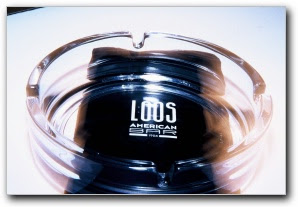
There are bars and then there is the Loos Bar. Designed by Adolf Loos, this bar is the bastion of cool in a city that takes tourist kitsch to new heights.

WHERE TO EAT
Plachutta, Wollzeile 38
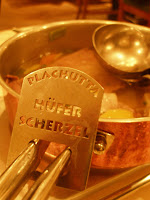
Dining here in an education, literally. Your waiter will guide you through a menu featuring seventeen cuts of beef. Order the boiled beef - Huferscherzel. You will be served a traditional beef broth. From the same pot comes your beef that will be served with root vegetables, toasted black bread, apple and horseradish.

Restaurant Zum Kuckuck, Himmedlpfortgasse 15
Don't be put off by the name or the kitch decor. We found this place when we were asked for directions. We stumbled upon it first and stole their table. Moral of the story - always make a reservation. The seasonal menu is stand out. We arrived during mushroom season. Picked locally and served with a small medallion of beef, they were fabulous.

Trzesniewski, Dorotheergasse
It's easy to find Trzensniewski, just look for the lunchtime crowd. Simple food - rye sandwiches ordered with either a pfiffer (0.8 beer) or vodka. The pfefferoni scharf goes perfectly with the beer.

WHERE TO INDULGE
Demel, Kohlmarkt 14
The mecca of confectionary in a city that would satisfy any chocolate lover. It's the size of a department store and the selection of goodies unlimited. It is worth buying something just to get the packaging.


Hotel Sacher, PhilharmonikerstraBe, 4
Home to the original sacher torte, this hotel is all elegance. Its claim to originality is no presence, a legal courtcase deemed that there may be many sacher tortes but this is the original, the result of a culinary mishap or so the story goes.

Naschmarkt
A must-do for any foodie. Wander through the market and sample breads, oils and imported goods from Turkey. While you are there, check out the fabulous Wagner apartments.

And finally a big thank-you to WKB for our trip and for KG for sparing him.

Tuesday, October 02, 2007

Bodily pleasures: Hamam Sahara Wellness

The entrance was inconspicuous and we could have easily walked pass or mistaken it for a restaurant with its yellow and green lurid signs. It was only the sign of sahara wellness that suggested this was not another Turkish restaurant tucked behind Düsseldorf train station.

Even on entering, there was no suggestion of what would greet us beyond the entrance. A male odalisque reclined fully clothed in his opulent splendour and watched Saudi music clips on a wide plasma screen, while we made our enquires. There were five of us, would this be ok? What treatments were available? Should we have booked?

For a Sunday in Düsseldorf, we opted for the royal treatment. This was to be an indulgence that will take over five hours.

On arrival, we are given robes and a silver tas (bowl) containing liquid soap of mud and olive oil and a kese, scrubbing mitt before being lead into the inner sanctuary of the hamam. Inside, it is a labyrinthine of titled rooms. As we pass through each room, the perfumes of rose, lavender and rosemary evoke the pleasures of a perfumed garden. Each room is a quiet sanctuary of mosaic titles, of brilliant blues and yellows that dance in the familiar arabesques of Arabic art.

The ritual of washing begins with a sauna. Wrapped in a pestamal, a traditional checked cloth worn at the haman, any feeling of tenseness dissolves. The steam is gentle and warming and after twenty minutes, we emerge relaxed. We then wash, before being lead to another treatment room where our treatment begins.

First we are scrubbed. Lying flat on a titled bed, any dead skin is removed by the rigorous of rubbing of skin beginning with the face and then the arms. The experience is strangely lulling given the coarseness of the mitt. My limbs become heavy and seep into the titles beneath me. No English is spoken; I only know when to turn when I am gently repositioned. Clean again, I am rinsed before being soaped.

Bags of fine bubbles are opened and spread over the body in layers. This is not a fine film of bubbles but more like a bubble bath without water. My skin enlivened by the scrubbing is alive to every sensation as the bubbles dissolve as I am massaged. A nagging shoulder and neck pain immediately feel better and the almond scent of the soap reminds me of childhood baths. All I can hear are faint sounds in the distance and the sound of running water.

Between treatments, we retire to the relaxation room to drink sweet Moroccan tea. Hamans were traditionally places to fulfil the Islamic practice of cleanliness as well as to mingle, socialise and gossip. The idea is just to sit quietly, despite the German magazine scattered on small wooden tables. We recline. I sit in silence, while the others talk lazily and drink tea. We are told to rest for twenty minutes before our next treatment.

We are taken to another wash room, modelled on the wash areas outside Mosques and lead to a cold foot bath. The water is icy cold but slowly warms to body temperature. The stone bed in the next room calls and so we lie beneath man-made stars on a bed-like temple. The heat from the stone emanates through the titles and again my body is lulled to sleep only to be awakened for a massage. I am lead downstairs past the reclining male odalisque to a small treatment room.

For the next forty minutes, I am massaged from foot to head. Time ceases to exist and I am lost in my own body. My limbs are weightless and I am docile in my movements. I am simply turned but my body folds into the pressure of the massage. I am all surface, a receptacle of touch. It makes me several minutes to regain consciousness and I am unsteady on my feet. I meander back to the stone bed to allow the heat to return to my body.

On the way out, the male odalisque offers us fragrant perfume of rose and sandalwood. ‘It’s to relax you'. Personally, I don't feel that I could be any more relaxed. I am also offered a brochure on Islam. I confess that I don't speak German but that I'll come back. He agrees.

Mintrop Str.21
40215 Dusseldorf
T: +49 2 11 271 3321

A special thanks to the beautiful Inga, Mish, Maya and Jane for being such lovely bathing companions.

Friday, August 10, 2007

I left my heart in Paris

Most good travel stories begin and end with a train ride.

Mine started in Paris and ended with an unexpected connection with a stranger. It is a romantic end to a story about Paris – a place where I left my heart, only to rediscover it on the Eurostar.

Paris is the city that everyone wants to come to.
This lou lou of the continent is by reputation flirty, difficult and even distant. Yet, once in her presence we only want more and she in turn feeds our imaginations. Think of Baudelaire’s image of the roaming flaneur. Of Collette and Gigi. Perhaps Frank Sinatra said it best - I love Paris in the winter and the summer. I love Paris, anytime of the year...
Like all devotees, I came to her with a list of must-dos and a cramped itinerary. Some days I played tourist and marvelled at her spectacle. Other days, I played truant and escaped to the Latin quarter and Marais to the markets.

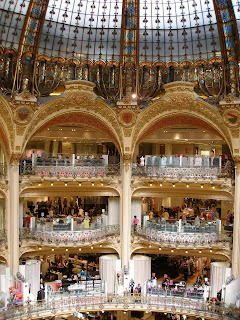
With a preoccupation with style at the best of times, I confess that I indulged at Printemps and Galleries des La Fayettes. This is no better way to experience French style than in its department stores. From the simplest of counter displays to the buildings themselves, everything is an art form. Such beauty is intoxicating. It takes you to soaring heights, only to leave you dizzy and breathless. The boulevards lure your eye and the architecture bares all the flourishes of a skilled calligrapher.


To fall in love with Paris is to fall in love with the look of Paris. At some point in her history, did she decide that she would not be anything less than dazzling beautiful?


A trip to Versailles confirms that she has only known the most decadent and risque of pleasures. In the grounds of this once regal palace, all paths lead to a chance encounter. Everything is about seduction. Visitors take to the grounds to promenade to recover from the blinding opulence of the hall of mirrors. There are boats to be taken and walks to be had. Only these pleasure rides are on tourist boats rather than gondolas imported from Venice and the lovers walks now house a thriving café but we love her nonetheless.

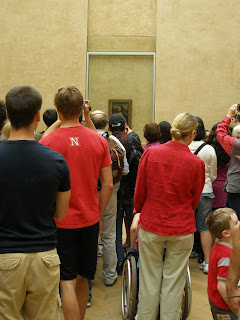
The only competitor for her attention is that spectacle of all spectacles, the Mona Lisa.
From behind her gilded cage, this Italian donna sits listless, bored and benevolent. With tourists lining up to see her, what does she think, this silent one? The desire to collect is the desire to conquer. So what do we desire in our encounter with her. In a room filled with art treasures, our eyes only seek hers. Each gaze wants to uncover her secret – the woman who has remained silent despite centuries of showgirl celebrity.

People move from spectacle to spectacle both here and in the Musee d’Orsay, where the extraordinary sights of a Redon go unnoticed. The shimmering textures that self-illuminate in the colours of gold and peacock can’t compare with the names of Monet and Renoir.

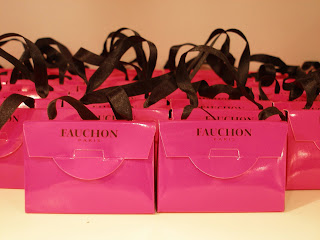
In Paris, the food stores are as glamorous as a haute couture label. Fauchon is devoted to the art of epicurean pleasure. The ground floor competes with the best of the catwalks with its sleek surfaces, artistic displays of Escargot de Bourgogne at €120 a kilo and designer wrapping of hot pink, black and gold. Shopping at Fauchon is the equivalent of shopping at Chanel.


This is the place to seek the perfect Madeleine – there are fourteenth styles including truffle, Roquefort, citron, orange, miel. Upstairs is devoted to arts of the table – chocolate, coffee, teas, preserves. wine. All I can afford is the Confiture d’Amour – Fauchon’s own love preserve made from strawberry, passion fruit juice and rose petals.


But I want more and am bored by the glamour; so I seek refugee in the Latin Quarter. I am looking for the French table beyond fashion labels and discover it in a small street off the Rue Seine. Here within two hundred metres, I find six food stores and cafes: Fromage 31, Traiter Italien, Bistro Perres et Filles, Marquise de Sevigne, da Rosa and further along Cacao et Chocolat.
At Fromage 31, I discover a world of regional cheese, in particular varieties that I have never heard of. This is French patriotism at its best.
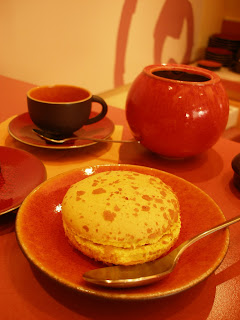
At Cacao et Chocolat, I am initiated into the world of the macaroon. I try Earl Grey with my café.


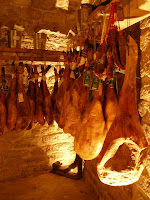
At da Rosa, I follow a winding staircase down to the basement to find not a wine cellar but a room of Spanish jamon.

And on I walk, finding olive oils (lemon, green leaf of lemon, lemon and mandarin, basil, chiili pepper, mint, bergamot and mandarin), as well as tapanades – black olives with coffee, green olives and pistachio, black olives and capers.

For dinner, we go to Marais. First to Le Temps au Temps, but the restaurant is so busy that we need to return the following night. So instead, at the nearby Mansouria, I dine on La Kurama - poulet with preserved tomato jam, rose petal and honey sauce. In the early evening, soft light peers into this converted French bistro across the terracotta stained walls and frescos of henna-stained arabesques. The dish is dangerously good, aromatic and heady.

Served on a bed of steamed couscous laced with almond and cinnamon, it is almost inedible in its richness. A vegetarian dish proves simpler fare, though no less interesting; in particular the sweet smells of harissa and the side dish of white raisins and chickpeas. Dinner concludes with thè a la menthe – a sweet Moroccan mint and coffee perfumed with orange water and cinnamon.

The following night, it is Le Temps au Temps. We sit at the bar as it is the only place available but happily do so to experience cuisine recreative. This is a meal like no other.

We begin with a salmon cooked with smoked tea – the favouring delicate and unpretentious served with hertiage tomatoes.

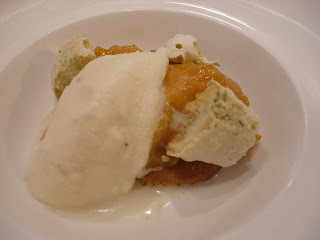
It is a relatively unadorned dish that speaks for itself. It is followed by salmon with dill and concludes with apricot tart with goat’s cheese sorbet and a meringue of green tea.
The evening ends perfectly with the notes of Libertango played by a busker in the metro.

But what about the boy? The train ride.
As my dear friend Jane says ‘there are experiences you want always to remember and then there are those that are worth wandering down the track for more’.
I remain ambiguous. At a lost, about what is choice and what is necessity.

There is something very alluring about the idea of fate. I nearly missed my train. He was sitting in my seat. The train was busy.
Sometimes things are just too complicated. Or maybe they are just destined to only ever be experiences.
It was a conversation that began with an apology and an invitation to share sushi and ended with both people standing at Waterloo station not knowing what to do, except say thank-you. Art, tango and Bach, an invitation to Paris, humanness and thinking machines were all discussed.

For me, it was a conversation where everything came together; for him, 'I so loved the way we connected, and I would definitely love to see you again somewhere soon'.

So to HT, thank-you and au revoir
To Lani, thanks for being such a fabulous travelling companion.